


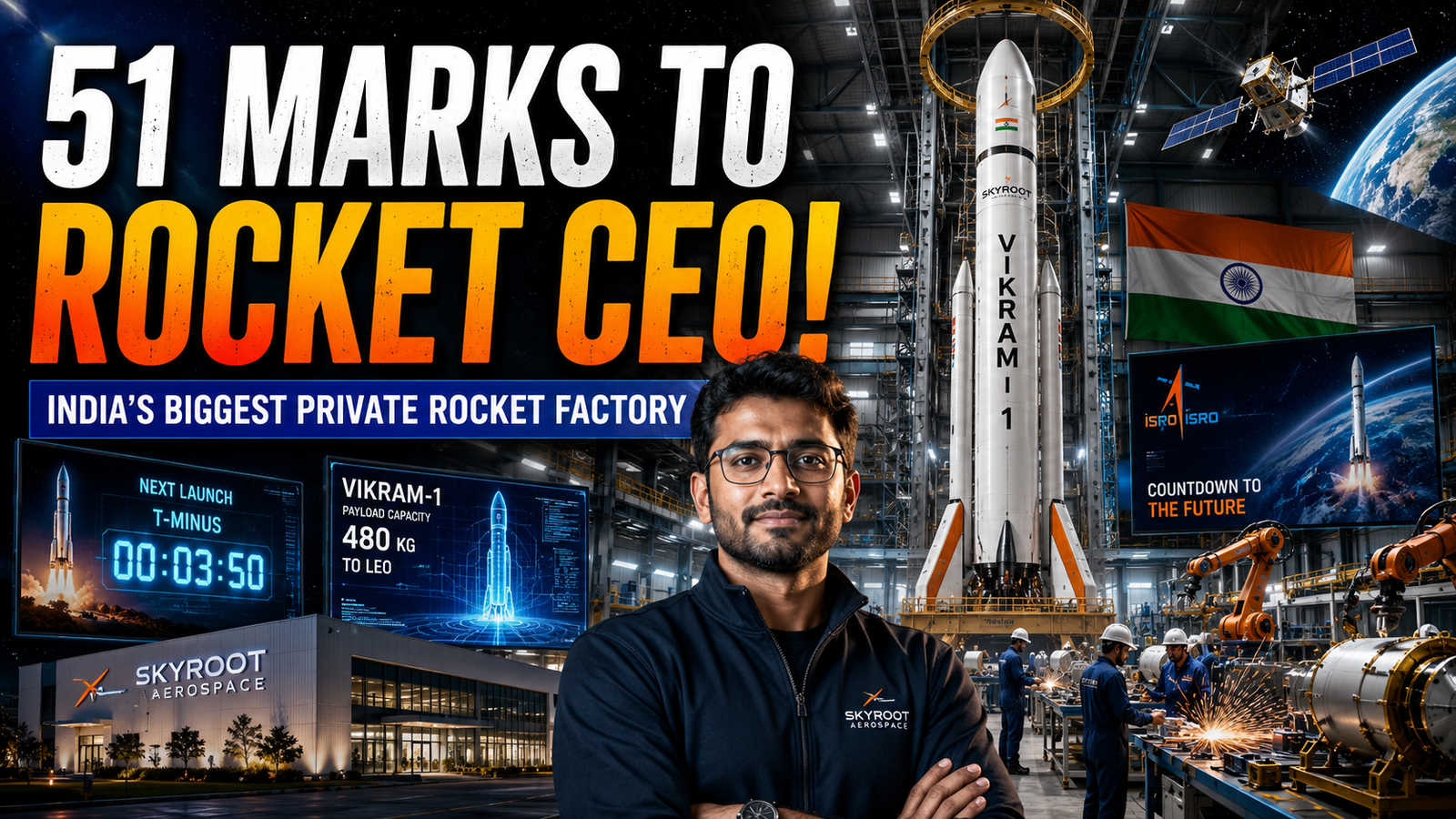
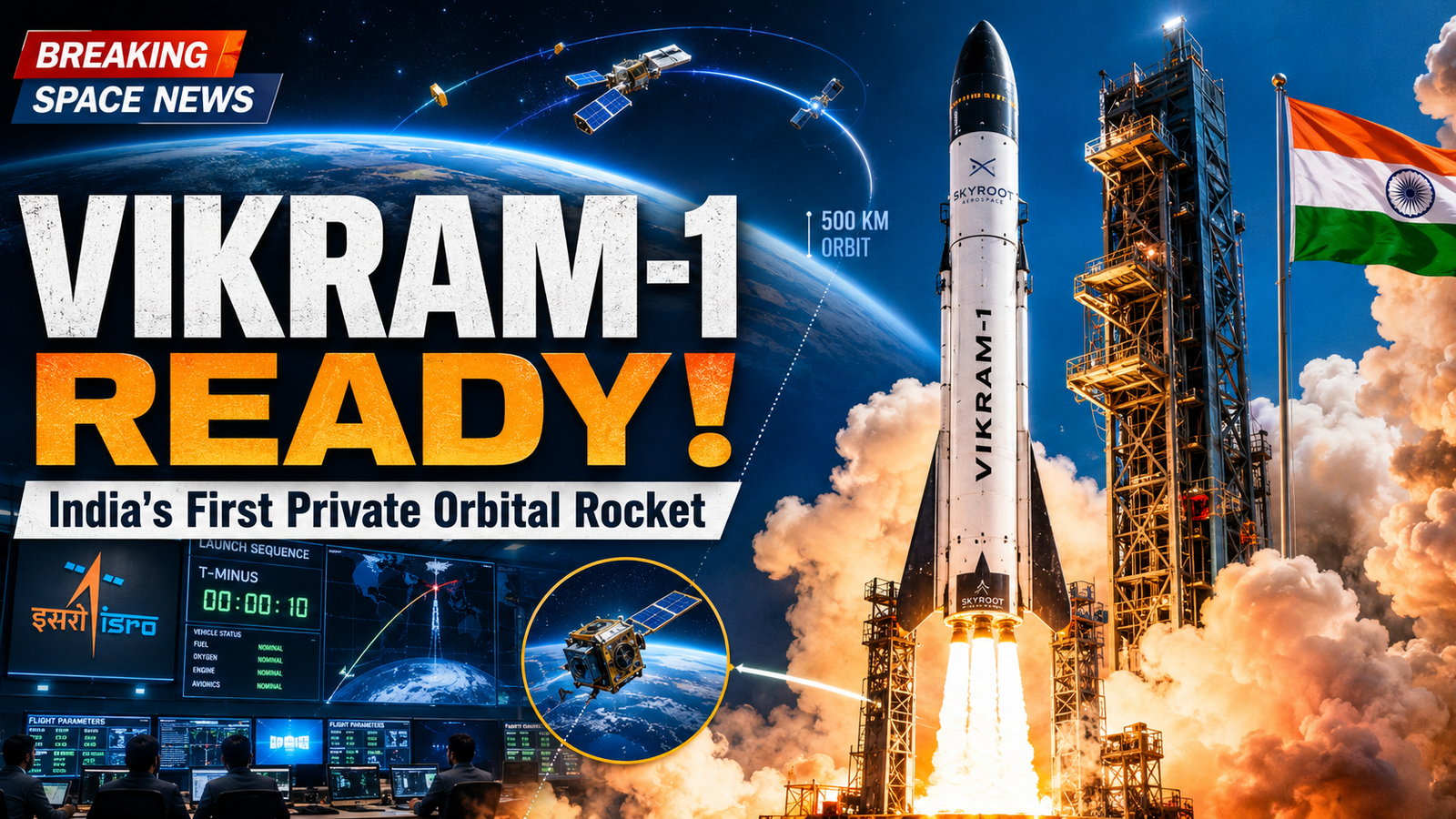


Skyroot’s Vikram-1 Ignites India’s Private Space Era: Startup Set to Launch Historic Orbital Mission
India’s rapidly growing private space sector is preparing for one of its biggest milestones yet. Skyroot Aerospace, the Hyderabad-based space startup, is gearing up for the maiden orbital launch of its Vikram-1 rocket, a mission that could redefine India’s role in the global commercial space industry.
After successfully demonstrating its technological capabilities with the Vikram-S suborbital launch in 2022, Skyroot is now taking the next giant leap toward full-scale orbital launches. If successful, Vikram-1 will become India’s first privately developed orbital launch vehicle to reach space.
The mission represents much more than a rocket launch—it symbolizes India’s transformation from a government-led space program into a thriving ecosystem where private startups are driving innovation alongside ISRO.
What is Vikram-1?
Vikram-1 is Skyroot Aerospace’s first orbital-class launch vehicle designed specifically for launching small satellites into Low Earth Orbit (LEO).
Named after Dr. Vikram Sarabhai, the father of India’s space program, the rocket reflects India’s ambition to become a global launch destination for commercial satellite missions.
The vehicle has been engineered using advanced manufacturing techniques, lightweight composite materials, and 3D-printed rocket engine components to improve efficiency while reducing production costs.
Key Features of Vikram-1
Some of the major highlights include:
- Three-stage solid propulsion launch vehicle
- Designed for Low Earth Orbit (LEO) missions
- Payload capacity of approximately 300 kg to 500 km Sun-Synchronous Orbit
- Modular architecture for future upgrades
- Carbon composite structures for reduced weight
- Extensive use of 3D-printed rocket engine components
- Cost-effective commercial satellite launch platform
- Built entirely by an Indian private aerospace startup
Mission Objectives
The primary objective of the Vikram-1 mission is to validate Skyroot’s complete orbital launch capability.
Key mission goals include:
- Demonstrating reliable orbital insertion
- Deploying customer satellites
- Validating navigation and guidance systems
- Testing onboard avionics
- Proving stage separation systems
- Demonstrating commercial launch readiness
A successful mission would position Skyroot among a select group of private companies worldwide capable of independently launching satellites into orbit.
Building on Vikram-S Success
Skyroot first entered the history books in November 2022, when it successfully launched Vikram-S, India’s first privately developed rocket.
The suborbital mission successfully validated several critical technologies including:
- Flight computer
- Guidance systems
- Telemetry
- Flight software
- Structural integrity
- Mission operations
The success of Vikram-S laid the foundation for the much more ambitious Vikram-1 program.
Why Vikram-1 Matters for India
India has long been recognized for cost-effective satellite launches through ISRO.
However, the global space industry is rapidly shifting toward private participation.
Vikram-1 represents:
- Growth of India’s private aerospace industry
- Increased commercial launch capacity
- More opportunities for startups
- Stronger global competitiveness
- Expansion of satellite launch services
- Support for India’s space economy vision
The mission also aligns with the Government of India’s efforts to open the space sector to private companies through reforms led by IN-SPACe and NSIL.
India’s Booming Private Space Industry
Over the last few years, India has witnessed rapid growth in space startups.
Companies working across launch vehicles, satellites, propulsion systems, communication technologies, and Earth observation have attracted significant domestic and international investment.
Major Indian space startups include:
- Skyroot Aerospace
- Agnikul Cosmos
- Pixxel
- Bellatrix Aerospace
- Dhruva Space
- GalaxEye
These companies are helping transform India into a global hub for affordable space technology.
Global Market Opportunity
The worldwide small satellite market is expanding rapidly due to increasing demand for:
- Internet connectivity
- Climate monitoring
- Earth observation
- Defense applications
- Scientific research
- IoT communications
Commercial launch providers capable of delivering small satellites at lower costs are expected to play a major role in the coming decade.
Skyroot aims to capture a significant share of this growing international market.
Technology Behind Vikram-1
The rocket incorporates several advanced technologies including:
Carbon Composite Structures
Lightweight yet extremely strong materials improve payload efficiency.
3D Printing
Critical engine components are manufactured using additive manufacturing techniques, reducing production time and cost.
Advanced Avionics
Modern onboard computers and navigation systems enhance launch accuracy.
Modular Design
Future versions of Vikram rockets can be upgraded based on customer requirements.
Economic Impact
A successful orbital launch would have several long-term benefits:
- Increase investor confidence in Indian space startups
- Create high-skilled engineering jobs
- Boost exports of launch services
- Strengthen India’s position in the commercial space market
- Encourage innovation across aerospace manufacturing
Experts believe India’s private space economy could grow significantly over the coming decade as demand for satellite launches continues to rise worldwide.
Challenges Ahead
Like every inaugural orbital mission, Vikram-1 faces several technical challenges:
- Precise stage separation
- Orbital insertion accuracy
- Payload deployment reliability
- Propulsion performance
- Flight software validation
Despite these challenges, the successful testing conducted so far has generated optimism within the Indian space ecosystem.
What Comes Next?
If the maiden mission succeeds, Skyroot plans to offer regular commercial launches for domestic and international customers.
Future plans include:
- Higher launch frequency
- Expanded payload capabilities
- Global commercial partnerships
- Dedicated satellite missions
- Advanced Vikram launch vehicle family
The company aims to become one of the leading commercial launch service providers from Asia.
Skyroot Aerospace’s Vikram-1 is more than just another rocket launch—it represents a defining moment in India’s private space journey.
By combining indigenous innovation, advanced manufacturing, and entrepreneurial vision, Vikram-1 has the potential to reshape India’s position in the global space economy.
As the countdown begins, the entire aerospace community will be watching closely. A successful launch would not only validate years of engineering effort but also inspire a new generation of Indian space startups to dream even bigger.
Official & Reference Links
- Skyroot Aerospace: https://skyroot.in/
- IN-SPACe: https://www.inspace.gov.in/
- ISRO: https://www.isro.gov.in/
- NSIL: https://www.nsilindia.co.in/
Disclaimer
This article is intended for informational and educational purposes only. Mission timelines, payload details, launch schedules, and technical specifications are based on publicly available information from Skyroot Aerospace, ISRO, IN-SPACe, NSIL, and referenced media reports available at the time of writing. Launch dates and mission parameters may change based on technical reviews, regulatory approvals, weather conditions, or operational requirements. Readers are encouraged to follow official announcements from Skyroot Aerospace and India’s space agencies for the latest verified updates.