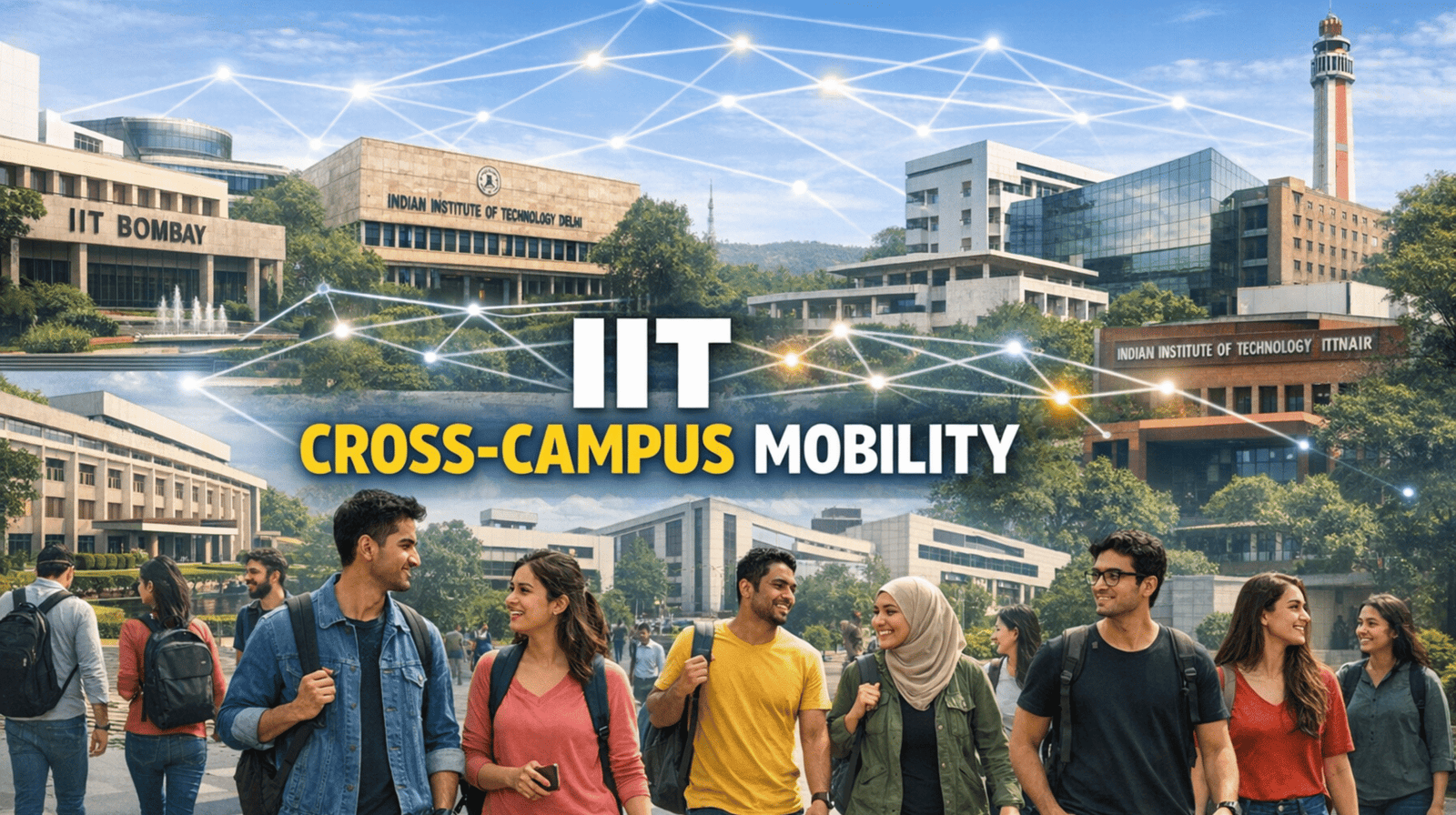




In a significant reform aimed at enhancing academic flexibility and interdisciplinary learning, the Indian Institutes of Technology (IITs) have introduced a cross-campus undergraduate mobility programme across all 23 IIT campuses.
The initiative allows undergraduate students to spend a semester at another IIT campus, offering exposure to diverse academic environments, research ecosystems, and faculty expertise.
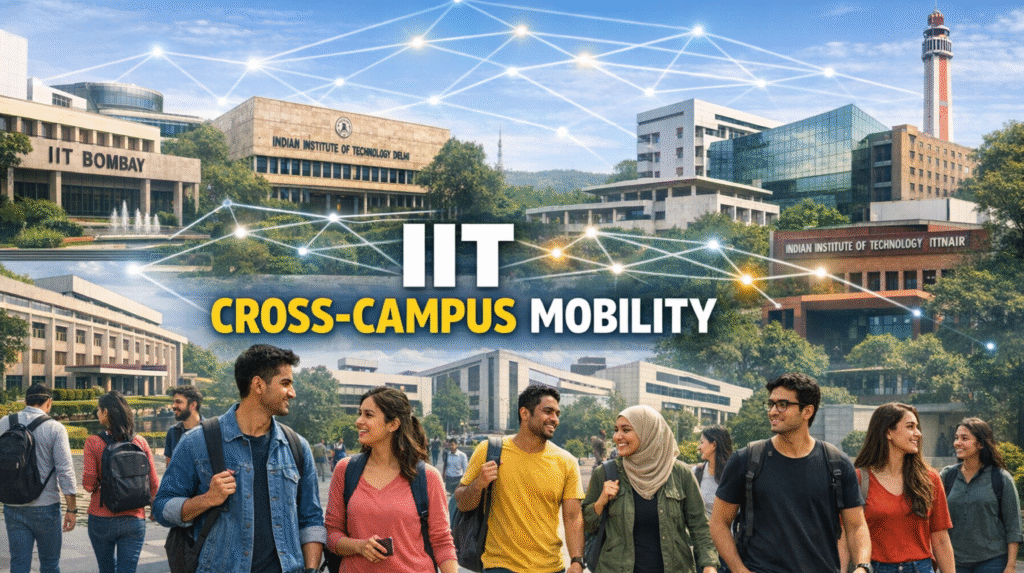
The move marks a major shift in how India’s premier engineering institutions approach collaboration and student mobility.
🔄 What Is the IIT Cross-Campus Mobility Programme?
The programme enables undergraduate students enrolled in one IIT to temporarily study at another IIT campus for a defined academic period, typically a semester.
It aims to:
- Promote interdisciplinary learning
- Provide access to specialised courses not available at home campus
- Encourage academic collaboration
- Strengthen the IIT ecosystem as a unified network
Instead of functioning as isolated institutions, the IIT system is moving toward a more integrated national academic model.
🌟 Key Benefits of Cross-Campus Mobility
1️⃣ Academic Flexibility
Students can enroll in niche courses offered by specific IITs. For example:
- Advanced AI research modules
- Semiconductor fabrication courses
- Climate engineering electives
- Robotics and deep-tech specialisations
This allows students to customise their learning pathways.
2️⃣ Exposure to Diverse Research Ecosystems
Different IITs have distinct strengths:
- IIT Madras: Deep-tech and startups
- IIT Bombay: Interdisciplinary research
- IIT Delhi: Policy and innovation
- IIT Kanpur: Aerospace and core engineering
Mobility enables students to experience these ecosystems firsthand.
3️⃣ Enhanced Networking Opportunities
Students gain:
- Peer networks beyond their campus
- Exposure to different faculty mentors
- Internship and research opportunities
- Access to wider alumni connections
4️⃣ National Academic Integration
The reform strengthens IITs as a unified national education network rather than independent entities.
⚖ Potential Challenges & Concerns
While the initiative appears progressive, experts and students have raised certain concerns.
1️⃣ Logistical Complexity
- Hostel accommodation adjustments
- Credit transfer mechanisms
- Administrative coordination
Smooth implementation will require strong inter-campus alignment.
2️⃣ Academic Pressure
Students may face:
- Curriculum mismatch
- Adjustment to new evaluation systems
- Adaptation to different teaching styles
3️⃣ Equity Questions
There may be high demand for top IIT campuses, potentially leading to:
- Selection bottlenecks
- Competitive access limitations
Clear merit-based policies will be critical.
🎓 What It Means for IIT Aspirants
For JEE aspirants and future IIT students, this reform:
✔ Expands academic possibilities
✔ Encourages interdisciplinary thinking
✔ Strengthens national collaboration
✔ Aligns IITs with global university mobility models
The move reflects global trends seen in institutions like:
- University of California system
- European Erasmus mobility programmes
- Multi-campus research universities
🌍 Global Competitiveness & Vision
As India competes globally in AI, quantum computing, semiconductors, climate tech, and advanced manufacturing, academic flexibility becomes essential.
Cross-campus mobility could:
- Encourage innovation
- Foster collaborative research
- Improve global university rankings
- Promote talent circulation
If implemented efficiently, the policy may enhance IITs’ global competitiveness.
🔮 Future Outlook
The success of this programme depends on:
- Transparent eligibility criteria
- Seamless credit transfer systems
- Infrastructure readiness
- Student support mechanisms
If executed effectively, IIT cross-campus mobility could redefine undergraduate engineering education in India.
⚠ Disclaimer
This article is based on publicly available media reports regarding IIT cross-campus undergraduate mobility. Policy details, eligibility criteria, academic regulations, and implementation timelines may vary depending on official IIT Council notifications. Students are advised to consult official IIT websites and institutional circulars for accurate and updated information. CareerVarta does not represent any IIT or regulatory authority mentioned in this report. The analysis provided is for informational purposes only.