
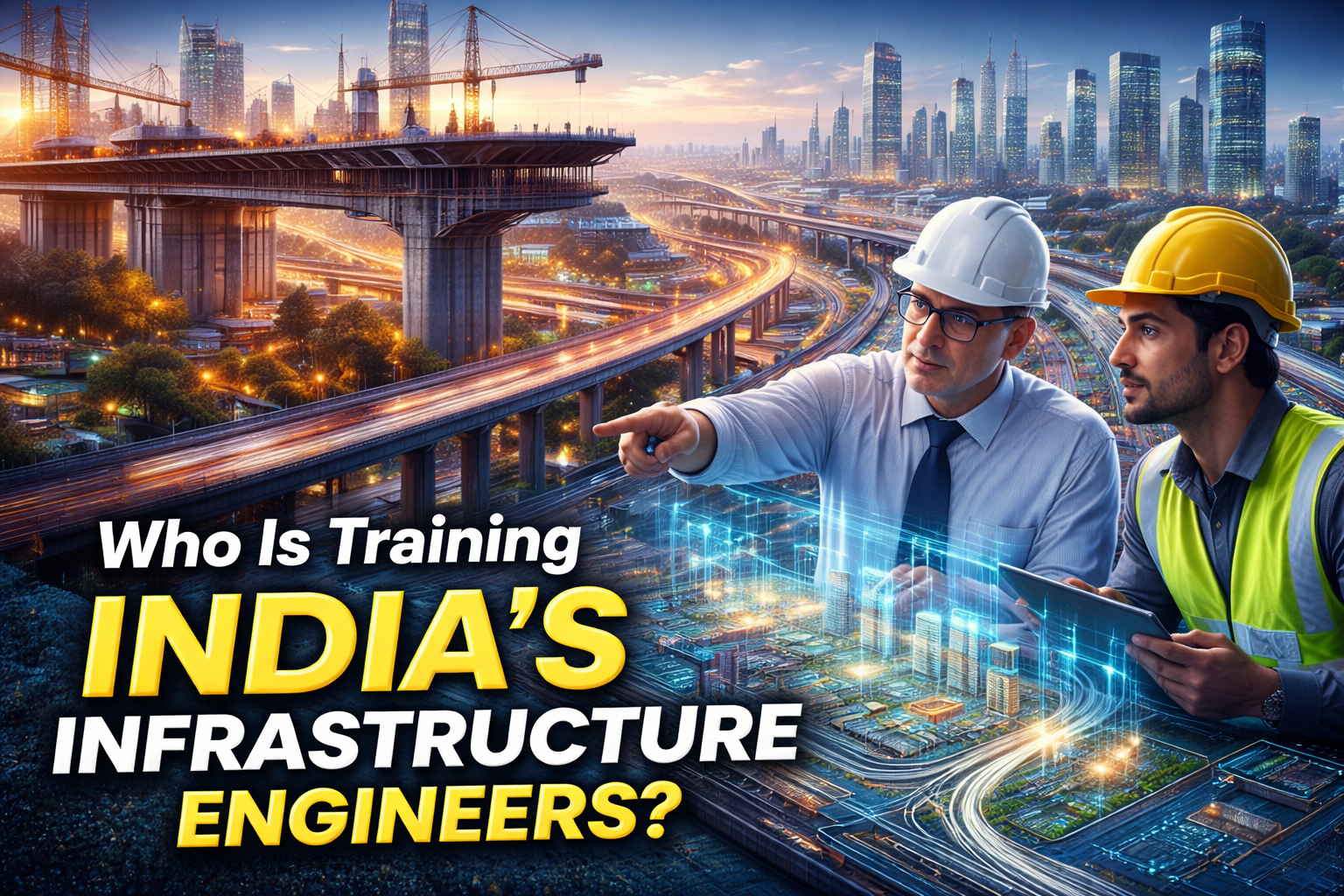





India is currently witnessing one of the largest infrastructure expansions in the world. From expressways and high-speed rail corridors to smart cities and renewable energy projects, the country is building at an unprecedented pace.
However, this massive transformation has raised an important question among policymakers and industry leaders:
Who is training the engineers required to design, build, and maintain this new India?
While infrastructure investment is accelerating rapidly, experts believe that engineering education and skill development systems must evolve just as quickly to meet the growing demand for highly trained professionals.
🚧 India’s Mega Infrastructure Push
Over the past decade, India has launched several large-scale infrastructure initiatives, including:
- National Infrastructure Pipeline (NIP)
- Bharatmala Highway Project
- Dedicated Freight Corridors
- Smart Cities Mission
- High-speed rail projects
- Renewable energy infrastructure
These initiatives collectively represent trillions of rupees in investment, positioning India as one of the fastest-growing infrastructure markets globally.
Such projects require a highly skilled workforce of civil engineers, structural engineers, environmental specialists, transportation planners, and project managers.
🎓 The Engineering Education Gap
Despite India producing hundreds of thousands of engineering graduates each year, many industry experts argue that there is a gap between academic training and real-world industry requirements.
Some of the key challenges include:
- outdated curriculum in many engineering colleges
- limited exposure to modern construction technologies
- lack of interdisciplinary learning
- insufficient industry collaboration
- shortage of hands-on training opportunities
As infrastructure projects become more technologically advanced, the demand for engineers trained in modern digital tools and sustainable design methods is increasing rapidly.
🧠 The Rise of BIM and Digital Engineering
One of the most important technologies transforming infrastructure development is Building Information Modelling (BIM).
BIM is a digital system used to design, manage, and visualize infrastructure projects using detailed 3D models and data integration.
Through BIM, engineers can:
- simulate construction processes
- identify design conflicts early
- optimise materials and costs
- improve project efficiency
Countries across the world are adopting BIM as a standard for modern infrastructure planning, and India is gradually integrating it into major projects.
However, the challenge lies in ensuring that engineering graduates are trained to use such advanced digital tools.
🏫 How Universities Are Responding
Recognising the growing demand for industry-ready engineers, several universities and institutions are introducing:
✔ BIM and digital construction courses
✔ interdisciplinary engineering programmes
✔ partnerships with construction companies
✔ research centres for sustainable infrastructure
✔ project-based learning modules
Institutes like IITs, NITs, and leading private universities are also expanding programmes related to:
- smart infrastructure
- transportation engineering
- sustainable construction
- data-driven engineering systems
These reforms aim to bridge the gap between classroom learning and practical infrastructure development.
🌍 Global Competition in Infrastructure Talent
India’s infrastructure expansion is taking place at a time when many countries are competing to build advanced cities, transport networks, and renewable energy systems.
To remain competitive globally, India must ensure it produces engineers who are skilled in:
- digital design tools
- automation in construction
- sustainable engineering practices
- climate-resilient infrastructure
- advanced materials technology
Developing such expertise requires continuous curriculum reforms, faculty training, and industry collaboration.
📈 Opportunities for Engineering Students
The infrastructure boom also presents massive career opportunities for students pursuing engineering.
High-demand fields include:
- civil engineering
- structural engineering
- transportation engineering
- environmental engineering
- smart city planning
- renewable energy engineering
Students with expertise in digital engineering tools, AI-driven design systems, and sustainable construction are likely to be especially valuable in the coming years.
🌟 The Road Ahead
India’s infrastructure revolution has the potential to reshape the country’s economic landscape and improve the quality of life for millions of citizens.
But building highways, metros, bridges, and smart cities requires more than financial investment — it requires a generation of highly skilled engineers capable of designing the future.
As educational institutions modernise their training systems, the next decade could see India producing not just infrastructure projects, but also world-class engineering talent capable of leading global innovation.
⚠ Disclaimer
This article is based on publicly available information and reports regarding India’s infrastructure expansion and engineering education ecosystem. Data and insights referenced are derived from credible news sources and institutional discussions. The content is intended for informational and educational purposes only. CareerVarta does not represent any government body, educational institution, or organisation mentioned in the article. Readers are encouraged to verify details through official sources for policy or academic information.