
Artificial Intelligence is advancing toward human-level capability far faster than most people realise — and society may be underprepared for the transformation ahead.
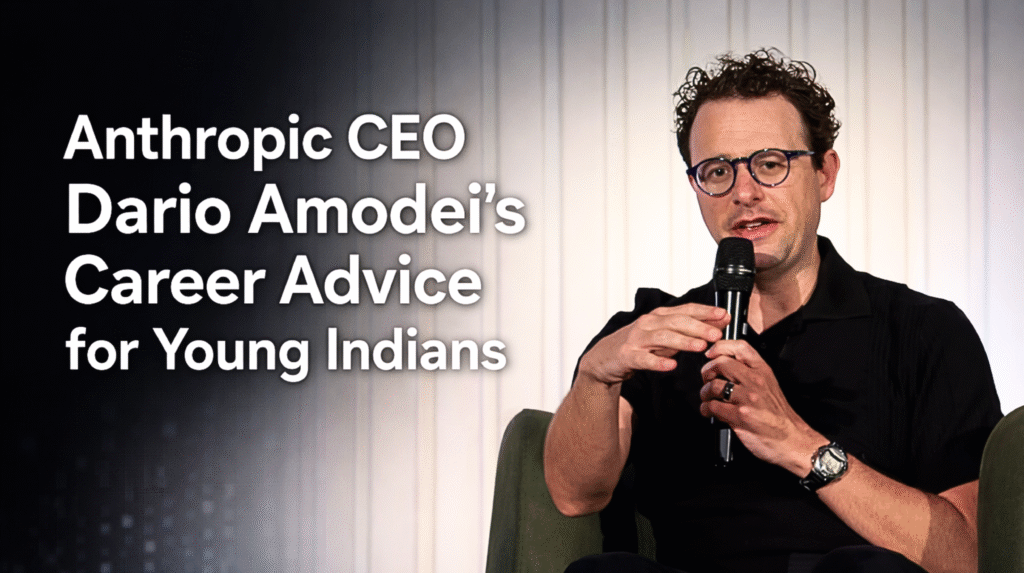
That was the stark warning delivered by Dario Amodei, CEO of AI research company Anthropic, during a conversation on Zerodha co-founder Nikhil Kamath’s podcast “WTF Is.”
Amodei described the current AI moment as:
“Standing on the shore while a massive wave gathers in the distance.”
According to him, the wave is not speculative — it is already forming. And its impact could reshape industries, careers, and education systems worldwide.
For India’s vast young workforce, the implications are profound.
🎓 “What Should a 25-Year-Old Learn Today?”
Framing the discussion around students and young professionals trying to choose career paths, Nikhil Kamath asked questions that millions of Indians grapple with:
- Which industries will AI disrupt first?
- Which sectors have longer stability?
- What skills should someone starting out today focus on?
- If launching a startup, what has tailwinds?
Kamath put it candidly:
“I’m trying to figure out what book to read, which college to go to, what skill set to learn if I’m starting a startup today.”
Amodei’s answer was clear and surprisingly simple:
Think human.
🤝 Human-Centred Work May Be More Resilient
Amodei advised young professionals to focus on:
- Tasks that involve human relationships
- Interpersonal understanding
- Real-world context
- Judgment and empathy
“I would think about tasks that are human-centred, tasks that involve relating to people,” he said.
While AI can process data, write code, and generate content, human-centered roles — especially those requiring emotional intelligence and contextual awareness — may remain resilient longer.
💻 Is Coding the First to Go?
One of the most striking moments came when Amodei addressed software careers directly.
“I think coding is going away first, or coding is being done by the AI models first,” he said.
He made a key distinction:
- Basic coding tasks → increasingly automated
- Broader software engineering (architecture, system design, integration) → takes longer to automate
However, even end-to-end engineering automation may eventually happen.
That said, certain areas may endure longer:
- Product design thinking
- Understanding user demand
- Managing AI systems
- Coordinating AI workflows
These elements still require human insight.
📈 The “5 Percent Advantage” Theory
Amodei introduced an important concept: comparative advantage in an AI world.
Even if humans perform only 5% of a task while AI handles 95%, that small contribution can become highly amplified.
“If you’re only doing five percent of the task, that five percent gets super-amplified and levered,” he explained.
In such a scenario:
- AI performs bulk automation
- Humans guide, refine, supervise, and contextualize
This could make individuals dramatically more productive — potentially 20 times more efficient.
However, he also acknowledged a long-term possibility: if AI reaches 99% automation, human roles may shrink further.
The key opportunity lies in the transition phase — where AI augmentation meets human oversight.
🔐 The Safe Career Formula: Human + Physical + Analytical
For young Indians planning their careers, Amodei suggested a blended strategy:
1️⃣ Human-Centred Skills
Empathy, communication, leadership, ethical reasoning.
2️⃣ Physical-World Engagement
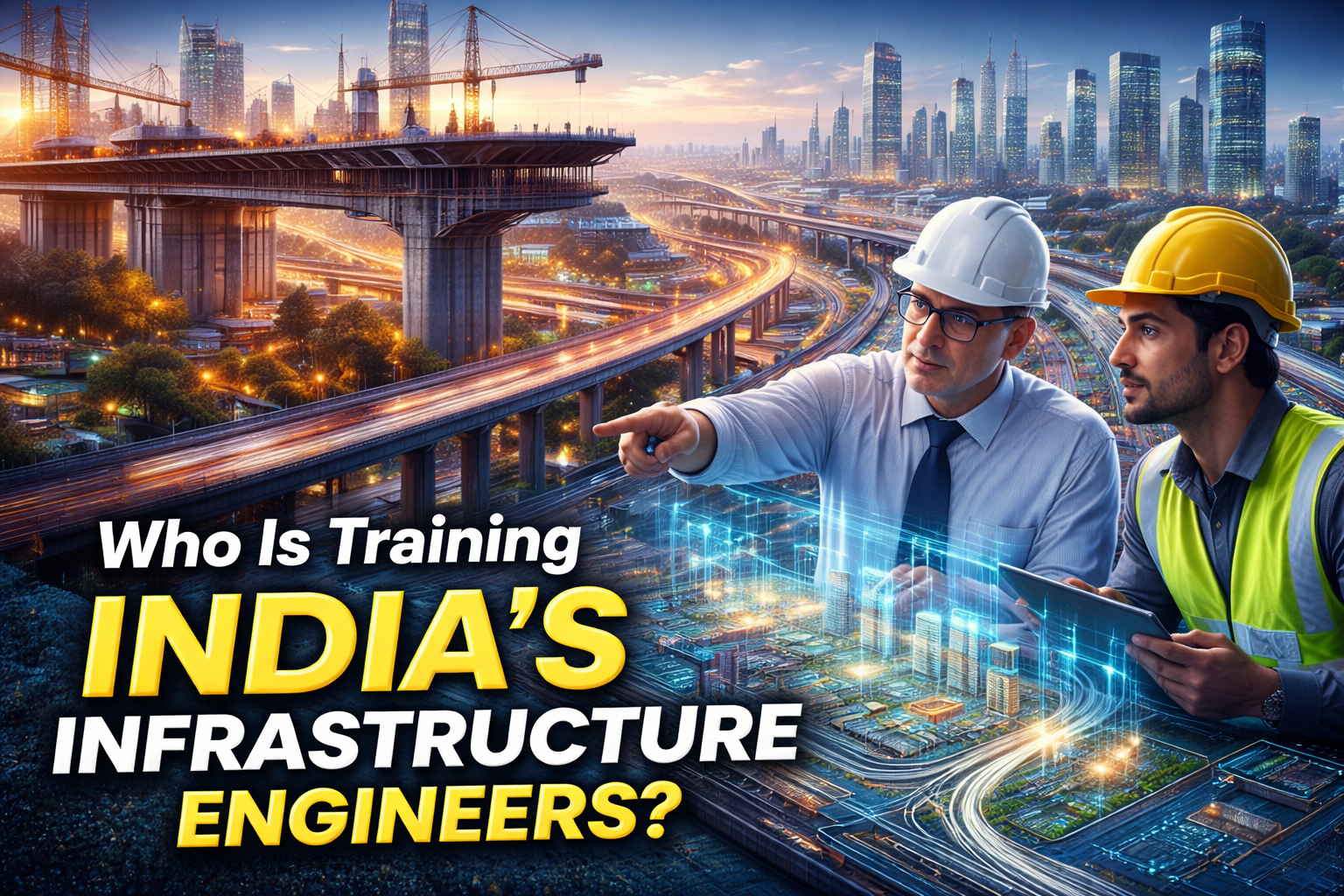
Industries involving infrastructure, hardware, supply chains, healthcare, climate tech, manufacturing.
3️⃣ Strong Analytical Foundations
Critical thinking, problem-solving, mathematical reasoning.
“I think there’s something to the physical world… and analytical skills that somehow tie them together,” he noted.
The idea is not to avoid AI — but to work at the intersection of:
Human judgment
Physical systems
Intelligent machines
⚠ The Bigger Warning: Institutions Are Not Ready
Beyond career advice, Amodei issued a broader caution.
AI progress is accelerating rapidly — but:
- Education systems are slow to adapt
- Regulatory frameworks lag behind
- Public awareness remains limited
As AI-generated content becomes increasingly sophisticated, even reality verification may become harder.
In such an environment, critical thinking becomes essential.
🇮🇳 What This Means for India
India has:
✔ The world’s largest youth population
✔ Rapid digital adoption
✔ Growing AI startup ecosystem
✔ Expanding global tech influence
But preparation must go beyond coding bootcamps.
Future-ready Indians may need:
- AI literacy
- Ethical awareness
- Interdisciplinary education
- Adaptability
- Continuous learning mindset
The message is sobering but empowering:
The AI wave is coming —
Position yourself to ride it, not resist it.
🔮 Final Takeaway
Dario Amodei’s advice does not predict human irrelevance.
Instead, it suggests:
The future will belong to those who combine
Technology fluency
Human understanding
Analytical depth
In an AI-powered world, uniquely human capabilities may become the ultimate competitive edge.
For young Indians choosing careers today, the question is no longer:
“What job is safe?”
But rather:
“How can I amplify my humanity with intelligent machines?”
⚠ Disclaimer
This article is based on publicly available statements and media coverage of Dario Amodei’s podcast discussion. The views expressed reflect commentary attributed to the speaker and do not constitute direct financial, educational, or career advice. Technological projections regarding AI development are subject to change and uncertainty. Readers are encouraged to conduct independent research and consult official institutional or professional sources before making career decisions. CareerVarta does not represent Anthropic, Zerodha, or any affiliated entities mentioned in this report.